
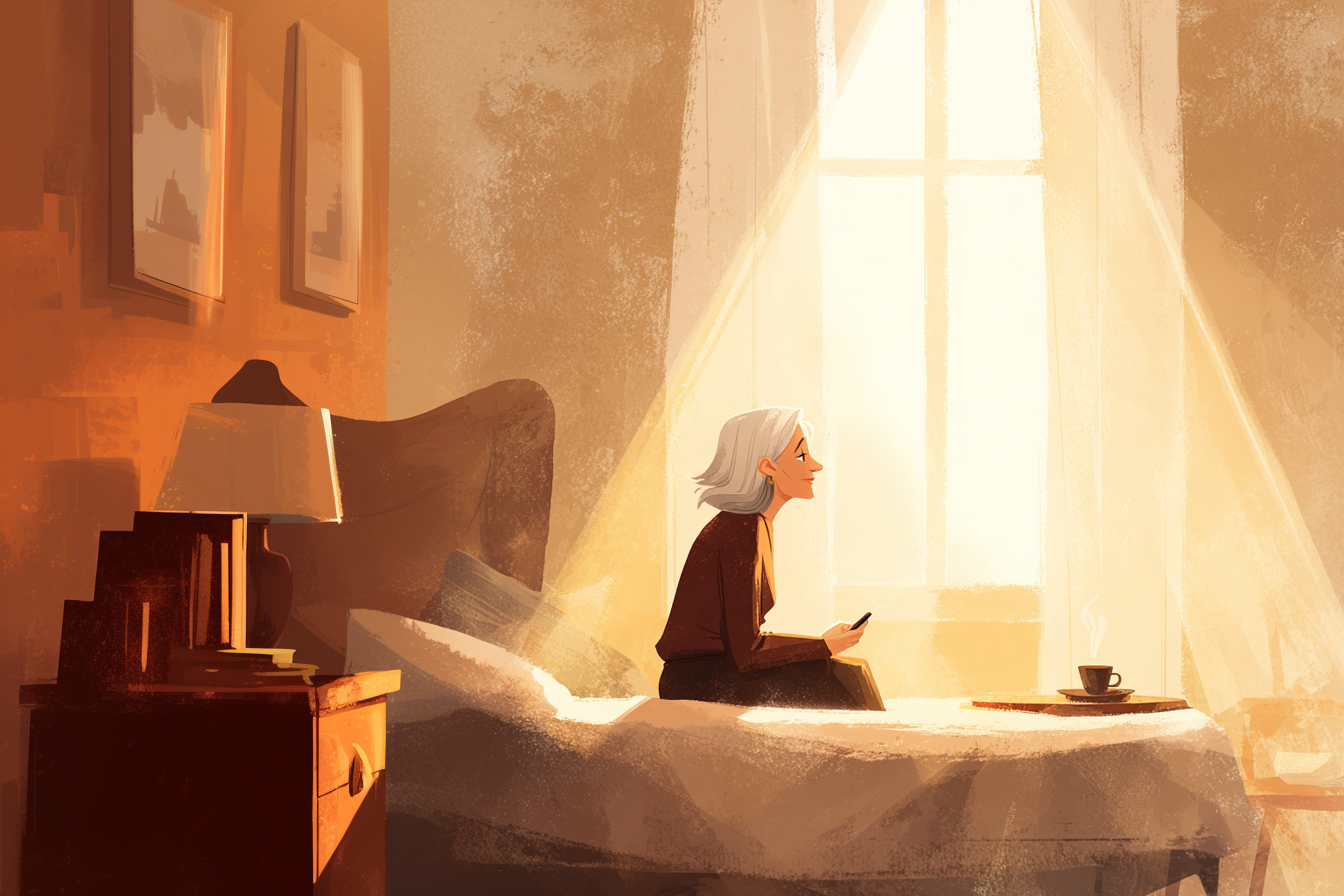
Reconstructing women’s sense of agency and value during the transitional phase.
During the transition of menopause, many women are quietly rebuilding their sense of agency—and more and more, this process is happening in digital spaces. Because menopause is still surrounded by silence, misunderstanding, and social stigma in everyday offline life, it can be difficult to find places where these experiences are truly heard. Online platforms, however, have become gentle shelters: spaces where women can look for information, share what their bodies and emotions are going through, and decide for themselves when, how, and how much they want to participate.
A global survey by Ipsos (2022) shows that over 70% of women now turn to the internet as their primary source of menopause-related information, and nearly 60% say they trust the experiences shared by other women more than messages from institutions or commercial sources. This reflects a quiet but meaningful shift of authority—from distant experts and market voices toward lived experience, mutual understanding, and relational knowledge.
Research also suggests that simply being present online is not what makes the difference; it is participation that does. Studies on online health communities have found that when women share their own stories, respond to others, and create content together, they report higher self-efficacy, a stronger sense of control, and deeper emotional validation (Zhao & Jing, 2016; Wu et al., 2021). For women going through menopause, these peer connections help turn what once felt like private, isolating bodily changes into stories that are seen, recognized, and gently held by others—restoring a feeling of being visible and valued.
Quantitative evidence further shows that digital spaces can support real role transformation, not just passive information intake. Empowerment-oriented health interventions indicate that women who join interactive, peer-based digital programs experience greater improvements in health literacy and quality of life than those who only receive one-way information (Self-efficacy intervention studies, 2021–2022). These findings remind us that agency does not come only from knowing more, but from being able to speak, to listen, to respond, and to be responded to.
In this light, helping women rebuild their sense of agency during menopause requires more than simply providing digital access. It calls for thoughtfully designed, participatory environments where women’s feelings and experiences are treated as meaningful knowledge, where emotional stories are welcomed, and where mutual support can grow. Platforms that encourage sharing, reciprocity, and collective understanding become more than tools—they become places where women can gently reclaim authorship of their own menopausal journeys, and feel, perhaps for the first time, that they are not walking this path alone.
Information source
https://www.ipsos.com/sites/default/files/ct/news/documents/2022-10/Ipsos-Global%20Views%20on%20Menopause.pdf
https://kns.cnki.net/kcms/detail/detail.aspx?dbcode=CJFD&filename=ZGGK202104019
https://kns.cnki.net/kcms/detail/detail.aspx?dbcode=CJFD&filename=NJSK201906015
发表回复