
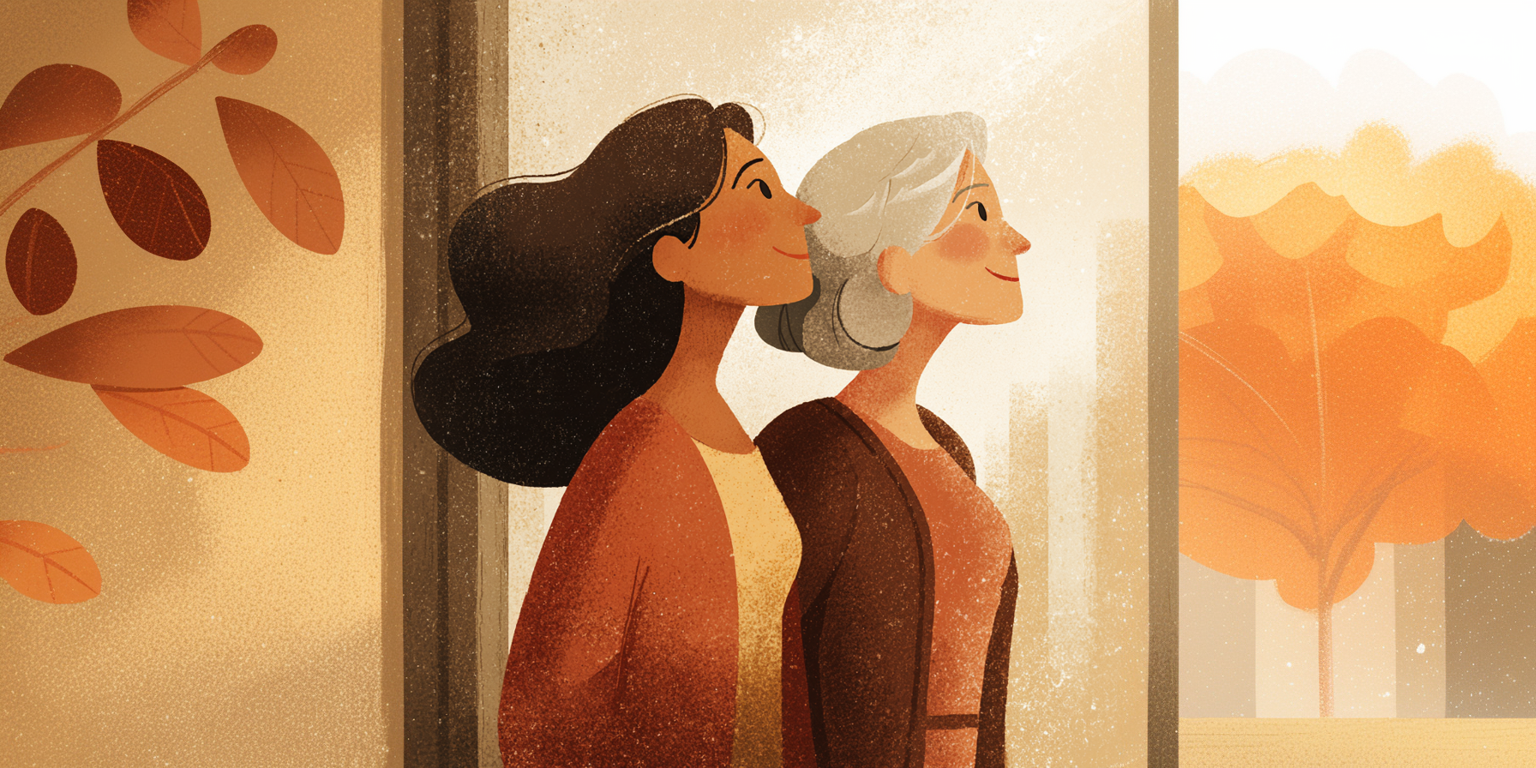
Filling the structural gap in social support for postmenopausal women.
Even though menopause is gradually being recognized as an important life transition, many women still find that the support around them feels incomplete—especially when it comes to emotional understanding and social connection. Most existing services are still centered on medical treatment: hormones, symptoms, risk control. These are important, of course, but they often leave little room for the feelings, relationships, and identity shifts that quietly unfold during this stage of life. As the World Health Organization pointed out in 2023, menopause care worldwide is still not well integrated with psychosocial support or quality-of-life concerns.
Research keeps telling us something very human and very simple: what helps women most during menopause is not only medicine, but being supported, understood, and not feeling alone. The long-term SWAN study shows that when women feel they have strong social support, they experience fewer depressive symptoms and greater life satisfaction (EL Khoudary et al., 2019).
At the same time, epidemiological data remind us how vulnerable this period can be—around 30% of menopausal women experience clinically significant depressive symptoms, and social isolation is one of the key risk factors (Bromberger & Epperson, 2018). In China, analyses of CHARLS longitudinal data further confirm that subjective well-being plays a crucial role: social support improves well-being, and in turn, well-being helps protect against depression (Xie et al., 2024).
All of this suggests that what is missing is not another pill or another one-way information sheet, but a more caring and connected system. One that allows women to tell their stories, to listen to each other, to feel seen, and to create meaning together. A support framework that grows like a community rather than operates like a clinic—where emotional expression, peer companionship, and shared value are woven into an ongoing ecosystem, gently accompanying women through the many changes of the menopausal journey.
Information source
https://www.who.int/news-room/fact-sheets/detail/menopause
https://womensmidlifehealthjournal.biomedcentral.com/articles/10.1186/s40695-019-0049-3
https://www.thelancet.com/journals/lanpsy/article/PIIS2215-0366(18)30098-0/fulltext
https://kns.cnki.net/kcms/detail/detail.aspx?dbcode=CJFD&filename=LCBL202408015
发表回复